Search


PROGRAM DETAILS
Duration2 years (full time)
Fees
€5850 per year
LanguageGreek
CampusNicosia
 DOWNLOAD BROCHURE
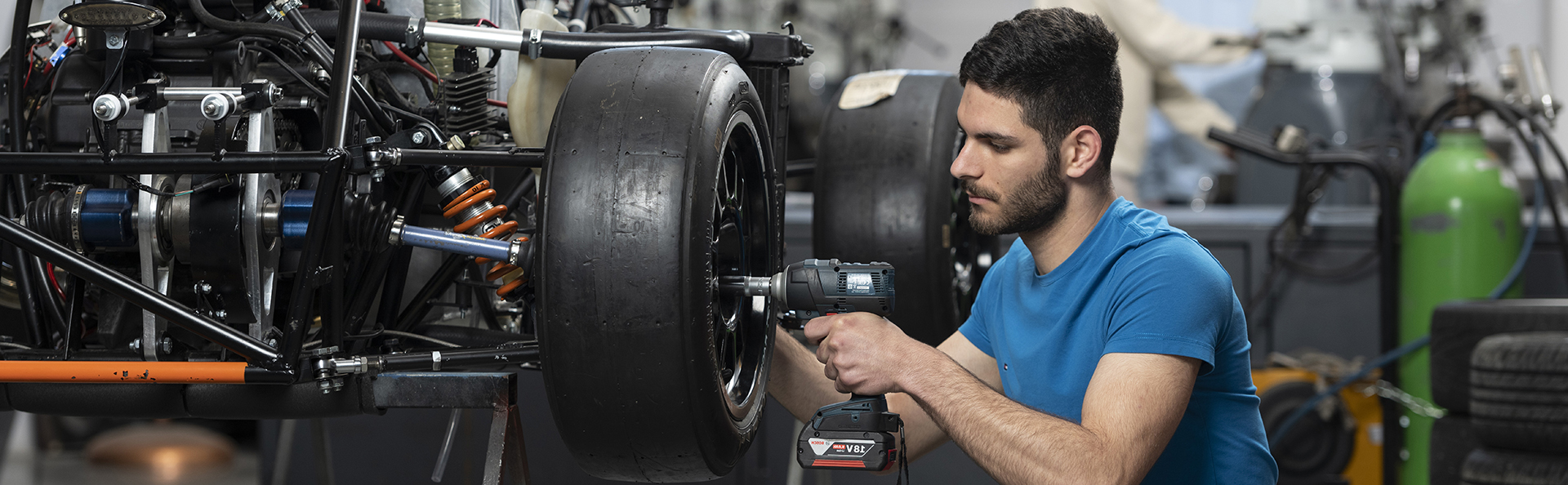
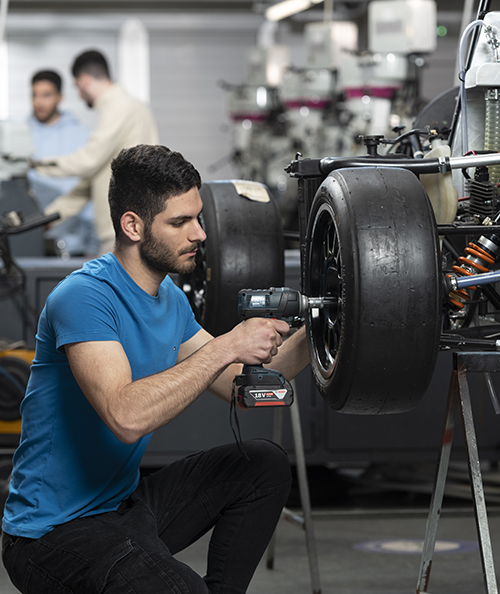
 The general objective of the Automotive Technician Study Program (2 years of study) is to professionally train students so that they can meet the needs of the labor market as described by ANAD and resulting from technological developments in the field. This specific study program will help students to become progressively familiar with the techniques of Vehicle Engineering, Electrical & Electrical Systems, Air Conditioning and more generally with the subsystems that support the braking, suspension and steering of vehicles.
This knowledge will build the necessary scientific and technical background, connecting the theoretical with the practical, so that they can adequately perform their duties, but also be able, if they wish, to continue their studies to obtain higher qualifications.
*The program has been submitted for re-evaluation to the Higher Education Quality Assurance and Certification Body. Pending the re-evaluation, the previous Evaluation and Certification remains valid until the completion of the relevant procedure in accordance with the "Laws on the Assurance and Certification of the Quality of Higher Education and the Establishment and Operation of a Body for Related Matters of 2015 to 2021", (Article 4 (c)).
Upon completion of the Automotive Technician program, students are able to:
1. Work comfortably in a specially equipped vehicle maintenance workshop.
2. Perform vehicle diagnostics and repairs using advanced technology methods.
3. Apply the skills they have acquired (organizational, managerial, technical) for the effective and timely maintenance of vehicles.
4. Use basic knowledge of thermodynamics to solve technical problems related to the engine or the air-conditioning system.
5. Use basic mathematical knowledge to solve technical problems.
6. Use basic computer knowledge to solve technical problems related to the communication of subsystems and electronic units.
7. Use basic knowledge of mechanics and machine elements to solve technical problems in power transmission systems.
8. Use basic knowledge of engineering measurement methods and mechanics to solve technical problems in braking, steering, and suspension systems.
9. Identify main electrical components and perform basic electrical measurements in circuits related to the working environment of the vehicle technician.
10. Apply legislation governing occupational health and safety related to the operation of workshops and the techniques used.
11. Be familiar with modern methodologies and techniques across a wide range of technologies and be able to use modern tools and equipment to solve technical and scientific problems.
12. Conduct techno-economic studies for the organization and operation of vehicle maintenance and repair workshops.
The holder of the Automotive Technician Diploma can:
• Work in vehicle repair workshops, vehicle inspection stations (MOT/Technical Control Centers), and other related professions.
• Establish their own Vehicle Workshop and obtain a vehicle technician license.
• Work in Cypriot companies operating abroad, performing repairs and regular maintenance of vehicles or other machinery powered by internal combustion engines.
• Continue their studies at Frederick University to obtain a degree in Vehicle Mechanical Engineering.
To obtain the Automotive Technician Diploma, the completion of at least 120 European Credit Transfer and Accumulation System (ECTS) credits is required as follows:
Module Group
ECTS
The student must successfully complete 101 ECTS, from the following list of modules:
| No. | Code | Name | ECTS | Hours / week |
|---|---|---|---|---|
| 1 | TO101 | INTRODUCTION TO FABRICATION TECHNIQUES | 5 | 3 |
| 2 | TO102 | VEHICLES’ TECHNOLOGY | 6 | 3+1 |
| 3 | TO103 | MATHEMATICS | 5 | 3 |
| 4 | TO104 | TECHNICAL AND ENGINEERING DRAWING | 5 | 3 |
| 5 | TO105 | ELECTRO-TECHNICAL APPLICATIONS | 6 | 3+1 |
| 6 | TO106 | OCCUPATIONAL HEALTH AND SAFETY ENVIRONMENT | 3 | 2 |
| 7 | TO111 | VEHICLE ELECTRICAL AND ELECTRONIC SYSTEMS | 6 | 2+2 |
| 8 | TO112 | POWERTRAIN SYSTEMS | 6 | 3+2 |
| 9 | TO113 | MATERIAL TECHNOLOGY | 5 | 2 |
| 10 | TO114 | ENGINES AND SUB-SYSTEMS | 6 | 3+2 |
| 11 | TO115 | SUSPENSION, STEERING AND BRAKING SYSTEMS | 7 | 2+3 |
| 12 | TO202 | VEHICLE ELECTRONIC MANAGEMENT SYSTEMS | 6 | 3+2 |
| 13 | TO203 | COMPUTER APPLICATIONS | 3 | 2 |
| 14 | TO204 | ENGLISH TECHNICAL TERMINOLOGY | 3 | 2 |
| 15 | TO205 | ELECTRIC AND HYBRID VEHICLES | 6 | 2+1 |
| 16 | TO212 | WORKSHOP ORGANIZATION AND MANAGEMENT | 5 | 2 |
| 17 | TO213 | VEHICLE AIR-CONDITIONING | 6 | 3+1 |
| 18 | TO214 | AUTOMOTIVE DIAGNOSTIC PROCEDURES | 6 | 2+2 |
| 19 | TO215 | GAS ENGINES AND ALTERNATIVE FUELS | 6 | 3+1 |
Total
120
Semesters
ECTS
| No. | Code | Name | ECTS |
|---|---|---|---|
| 1 | TO101 | INTRODUCTION TO FABRICATION TECHNIQUES | 5 |
| 2 | TO102 | VEHICLES’ TECHNOLOGY | 6 |
| 3 | TO103 | MATHEMATICS | 5 |
| 4 | TO104 | TECHNICAL AND ENGINEERING DRAWING | 5 |
| 5 | TO105 | ELECTRO-TECHNICAL APPLICATIONS | 6 |
| 6 | TO106 | OCCUPATIONAL HEALTH AND SAFETY ENVIRONMENT | 3 |
| TOTAL | 30 |
| No. | Code | Name | ECTS |
|---|---|---|---|
| 1 | TO111 | VEHICLE ELECTRICAL AND ELECTRONIC SYSTEMS | 6 |
| 2 | TO112 | POWERTRAIN SYSTEMS | 6 |
| 3 | TO113 | MATERIAL TECHNOLOGY | 5 |
| 4 | TO114 | ENGINES AND SUB-SYSTEMS | 6 |
| 5 | TO115 | SUSPENSION, STEERING AND BRAKING SYSTEMS | 7 |
| TOTAL | 30 |
| No. | Code | Name | ECTS |
|---|---|---|---|
| 1 | TO201 | INDUSTRY INTERNSHIP I | 7 |
| 2 | TO202 | VEHICLE ELECTRONIC MANAGEMENT SYSTEMS | 6 |
| 3 | TO203 | COMPUTER APPLICATIONS | 3 |
| 4 | TO204 | ENGLISH TECHNICAL TERMINOLOGY | 3 |
| 5 | TO205 | ELECTRIC AND HYBRID VEHICLES | 6 |
| 6 | FREE ELECTIVE | 5 | |
| TOTAL | 30 |
| No. | Code | Name | ECTS |
|---|---|---|---|
| 1 | TO211 | INDUSTRY INTERNSHIP II | 7 |
| 2 | TO212 | WORKSHOP ORGANIZATION AND MANAGEMENT | 5 |
| 3 | TO213 | VEHICLE AIR-CONDITIONING | 6 |
| 4 | TO214 | AUTOMOTIVE DIAGNOSTIC PROCEDURES | 6 |
| 5 | TO215 | GAS ENGINES AND ALTERNATIVE FUELS | 6 |
| TOTAL | 30 |